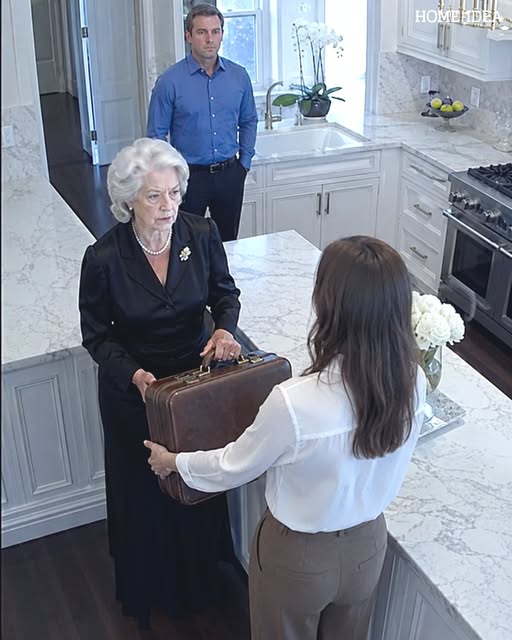
By the time we came back from the cemetery, my daughter-in-law was already moving through the living room like she had been waiting for the moment. She did not lower her voice. She did not even bother to pretend kindness for one more day. She looked at me, still wearing the black dress from the funeral, and said, “Now that he’s gone, cry it out, pack your things, and go live on the streets.”
My son stood behind her and said nothing.
That was the part I remembered most. Not the cruelty in her voice. Not the yellow sticky notes she had already started placing on furniture that had belonged to me for decades. Not even the way our wedding photo had been taken down from the mantel and leaned against the wall like it no longer belonged in the room.
It was my son’s silence.
I thought about all the years that had led to that moment. The double shifts. The missed holidays at the hospital. The money quietly stretched and saved and handed over whenever he came up short. The little humiliations I had explained away because he was my only child and I kept telling myself that family has seasons, that grief makes people strange, that decency eventually returns if you give it enough time.
So I said the one word neither of them expected.
“Okay.”
No tears. No scene. No begging to stay in the house I had helped build. I just slipped my hand into the pocket of my coat and wrapped my fingers around the small brass key my husband had pressed into my palm three weeks before he died.
“Keep this safe,” he had whispered in the hospital. “And don’t tell anyone.”
At the time, I thought it was medication talking. By that afternoon, standing in my bedroom with a stack of legal papers laid neatly across my bedspread, I understood he had been trying to tell me something I had failed to hear in time. The papers were ready for my signature. A voluntary transfer. The house, the property, everything pushed neatly toward my son while I was still wearing mourning black.
So I packed one small suitcase.
Two sweaters. My nursing shoes. My Bible. My mother’s quilt. The framed photo from my wedding day. In the kitchen, I left the signed papers on the table, picked up my old purse, and checked for three things: my wallet, my flip phone, and that brass key.
That night, I sat alone in a cheap motel off Route 119, staring at a lamp with a cracked shade and a vending machine dinner I could not bring myself to touch. Somewhere between the sound of traffic outside and the hum of the ice machine down the hall, I remembered the business card my husband had slipped into my purse months earlier. An estate lawyer. A Manhattan address. 47th Street.
I called.
The man answered as if he had been expecting me.
The next morning, before sunrise, I took the bus into Manhattan carrying everything I still owned in one suitcase and one purse.
At 9:07 the next morning, inside a quiet bank on 47th Street, a woman in a gray suit took the brass key from my hand, looked at the number stamped into it, and stopped calling me ma’am. She picked up the phone, said four words in a lower voice, and everything about the room changed.
Views: 5