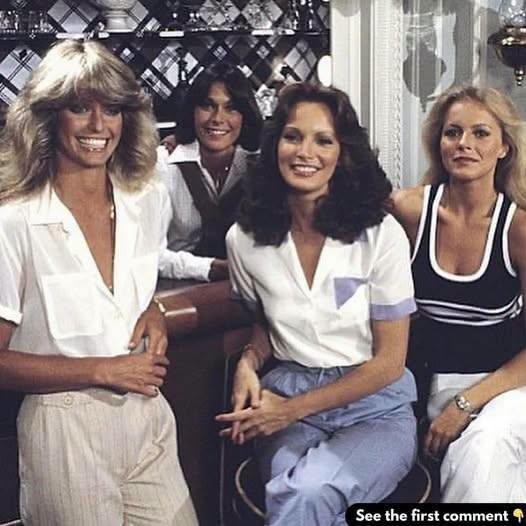
In 1976, a prime-time television experiment burst onto American airwaves and shattered every established rule of modern entertainment overnight. Viewers tuned in expecting a standard action procedural, but what they witnessed was a cultural earthquake that permanently redefined prime-time TV. Three breathtaking private investigators bypassed the male-dominated tropes of the era to become instant global icons, captivating tens of millions of fans every week. Yet, behind the glamorous wardrobe, explosive action sequences, and record-breaking ratings lurked an intense pressure cooker of studio politics, sudden exits, and behind-the-scenes turmoil that threatened to tear the phenomenon apart at its absolute peak.
When Charlie’s Angels debuted on the network screen, it did far more than captivate audiences; it launched a full-scale cultural revolution. Prior to its arrival, network television routinely relegated female actors to secondary roles: supportive wives, swooning damsels in distress, or office secretaries whose primary function was to hand files to the male lead. Charlie’s Angels inverted this paradigm entirely. Farrah Fawcett, Kate Jackson, and Jaclyn Smith stepped into the spotlight not as decorative sidekicks, but as the main event. They were intelligent, capable, and physically adept operatives who pursued fugitives, cracked complex criminal rings, and executed high-stakes undercover operations, all while exuding undeniable charisma and poise.
The visual style of the series quickly became a universal language of liberation and self-expression. The iconic wardrobe—featuring high-waisted denim, fitted jumpsuits, vibrant patterns, and sweeping feathered hairstyles—became an instant template for late-1970s fashion. Millions of women across the globe rushed to hair salons demanding the famous “Farrah flip,” adopting a look that symbolized carefree confidence, active lifestyle, and independence. The fashion on screen was not merely cosmetic; it served as armor for characters who moved fluidly between high-society galas and high-speed car chases. It communicated a powerful new subtext: a hero could be fierce, clever, and athletic without sacrificing an ounce of glamour.
Behind the glittering facade, however, the series was plagued by relentless internal volatility and corporate tension. The immense, overnight success of the show generated an unprecedented level of media scrutiny and overexposure. Farrah Fawcett, whose instantly recognizable red swimsuit poster became an international bestseller, felt the intense pressure of sudden megastardom almost immediately. Her shocking decision to depart the series after just one season sent shockwaves through the television industry and left executives scrambling to preserve the show’s miraculous formula.
This abrupt exit marked the beginning of a revolving door of lead actresses that reflected the network’s ongoing struggle to manage a hit powered by female stardom. While Cheryl Ladd joined the cast as Kris Munroe and managed to maintain high viewership ratings, internal friction persisted. Kate Jackson, often regarded as the creative brain and driving force behind the show’s initial premise, grew increasingly frustrated with formulaic scripts and restrictive shooting schedules that prevented her from taking on prestigious film roles. Her eventual departure, followed by subsequent casting shifts including Shelley Hack and Tanya Roberts, revealed a deeper truth about the entertainment industry of the era: Hollywood was eager to profit from female empowerment, but ill-equipped to handle the autonomy and demands of the women generating those profits.
Despite the turbulent cast changes, the underlying magic of the original run could never be fully replicated. Over the decades, media franchises routinely attempted to resurrect the property through big-budget feature films, modernized television reboots, and international adaptations. These contemporary iterations introduced bigger explosive stunts, martial arts choreography, and increasingly diverse casts to reflect changing cultural standards. Yet, while these modern revivals delivered polished entertainment, they rarely captured the lightning-in-a-bottle sensation of the original 1970s series. The original trio operated in a landscape where seeing three women lead an action series was genuinely radical, making their weekly victories feel like a victory for the audience itself.
The true legacy of Charlie’s Angels extends far beyond Nielsen ratings, syndicate reruns, or vintage fashion trends. It fundamentally altered the DNA of popular culture by proving that female-led action properties were not niche risks, but massive commercial powerhouses capable of dominating global media. The show paved the way for generations of dynamic female protagonists across television and film, establishing a blueprint that future creators would build upon for decades to come.
Ultimately, the enduring impact of the series rests on its simple yet revolutionary core message. It showed the world that women could occupy center stage without asking for permission, navigating complex situations with intellect, physical bravery, and unshakeable solidarity. Long after the prime-time airings faded into television history, the groundbreaking image of those original heroes standing shoulder-to-shoulder remains an indelible landmark in modern entertainment history.