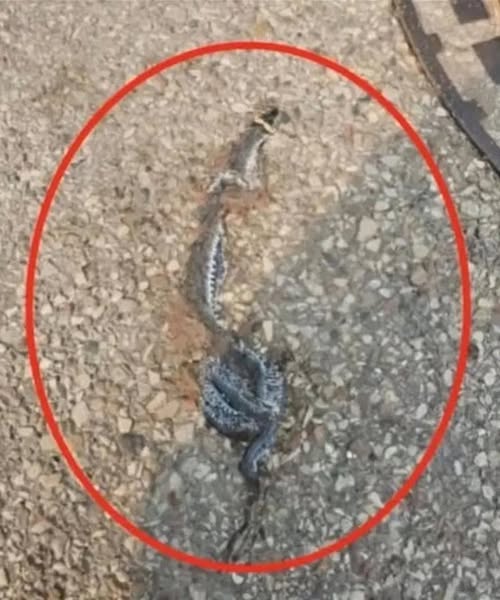
I was scrolling through my phone, half-lost in the glow of the screen, when something on the pavement made me stop. There, on the busy city sidewalk, lay a small grass snake—crushed, lifeless, its delicate green body twisted unnaturally. People stepped around it without a second glance. Cars rushed past, oblivious.But I couldn’t shake the image. It wasn’t just the snake—it was what it meant.
Lately, my neighborhood forums have been buzzing with similar sightings: snakes in backyards, on patios, even slipping through balcony cracks into apartments. At first, it seemed like random bad luck, but experts say it’s part of a pattern. As cities expand and temperatures rise, wildlife is being pushed into our streets, our homes—anywhere it can survive.
Grass snakes are harmless, shy creatures. Yet their sudden presence in urban spaces feels unsettling, like nature knocking at our door with a warning. The world is changing, and the boundaries between wild and urban are blurring. The question is: what do we do when the wild comes to us?