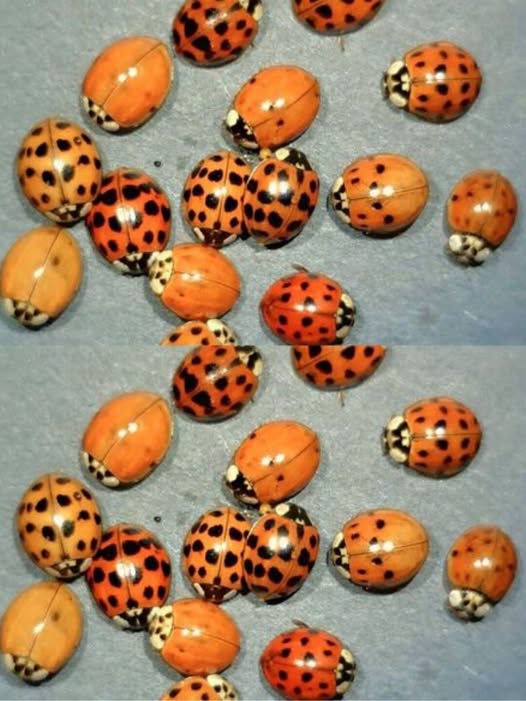
Yellow ladybugs are often mistaken for unusual versions of the familiar red beetle, but color alone does not identify a species. Lady beetles appear in yellow, orange, red, brown, and even black. The pattern and number of spots can vary within a species, so a yellow visitor is not automatically dangerous or rare.
Many yellow lady beetles are beneficial predators that feed on aphids, scale insects, and other pests. Their appetite helps protect garden plants without chemical insecticides. A few species feed on plants or fungi, making careful identification more useful than assumptions based on color.
The fourteen spotted lady beetle, for example, can appear yellow with dark rectangular markings. Other species have pale wings with numerous spots or almost no visible pattern. Asian lady beetles also range from yellow to deep orange and may have an M shaped marking behind the head.
Asian lady beetles are the ones most likely to gather around houses in autumn. They search for protected places to spend winter and can enter through small gaps near windows, siding, vents, and roofs. Large indoor groups may be annoying, but they do not reproduce inside walls or eat furniture.
When disturbed, some lady beetles release a yellow defensive fluid from their leg joints. It has a strong odor and can stain fabric or walls. Crushing them indoors therefore creates more trouble than gently collecting or vacuuming them.
The beetles can occasionally bite exposed skin, producing a brief pinch rather than a dangerous attack. Sensitive people may experience irritation or allergy symptoms around large infestations. Pets that eat many beetles can develop mouth irritation, so accumulated insects should be removed.
Prevention works best before cold weather. Seal cracks, repair screens, check weather stripping, and cover appropriate vents with suitable mesh. Exterior gaps around utility lines and window frames can admit insects even when doors remain closed.
If beetles are already inside, use a vacuum and empty the container outdoors. A stocking placed inside the hose can capture them for release without sending them into the machine. Avoid spraying pesticides through living spaces merely to address a small seasonal cluster.
Gardeners should observe what the insects are doing. Beetles eating aphids are allies. Damage to leaves may point to a plant feeding species, but holes alone do not prove the lady beetle caused them. Photographing the back, markings, and area behind the head can help a local extension service identify it.
Folklore associates yellow ladybugs with luck, change, optimism, or new beginnings. Those interpretations are cultural symbols rather than biological facts. Enjoying the symbolism is harmless as long as it is not confused with scientific identification.
A yellow beetle near a house usually means the same thing as a red one: a small insect has found food, warmth, or shelter. It does not predict weather, illness, or fortune. Its color reflects species and natural variation.
The practical response is simple. Leave outdoor beetles alone when they are helping plants, prevent large numbers from entering, and remove indoor visitors gently. Yellow ladybugs are not mysterious impostors. They are part of a diverse family whose members can be useful, inconvenient, or occasionally plant feeding depending on the species.
For gardeners, observation is the best next step. Photograph the insect, note the plant and compare its markings with a reliable local identification guide. Avoid broad pesticides until the species and problem are understood, because many ladybirds prey on aphids and other pests. The yellow shell may feel symbolic, but its ecological role is often the more remarkable discovery.
A local extension service or natural-history group can help when photographs are unclear. Accurate identification protects useful insects and prevents a harmless visitor from being treated as an infestation